When to Choose M0601C-111 Instead of a Flatter M06 Motor
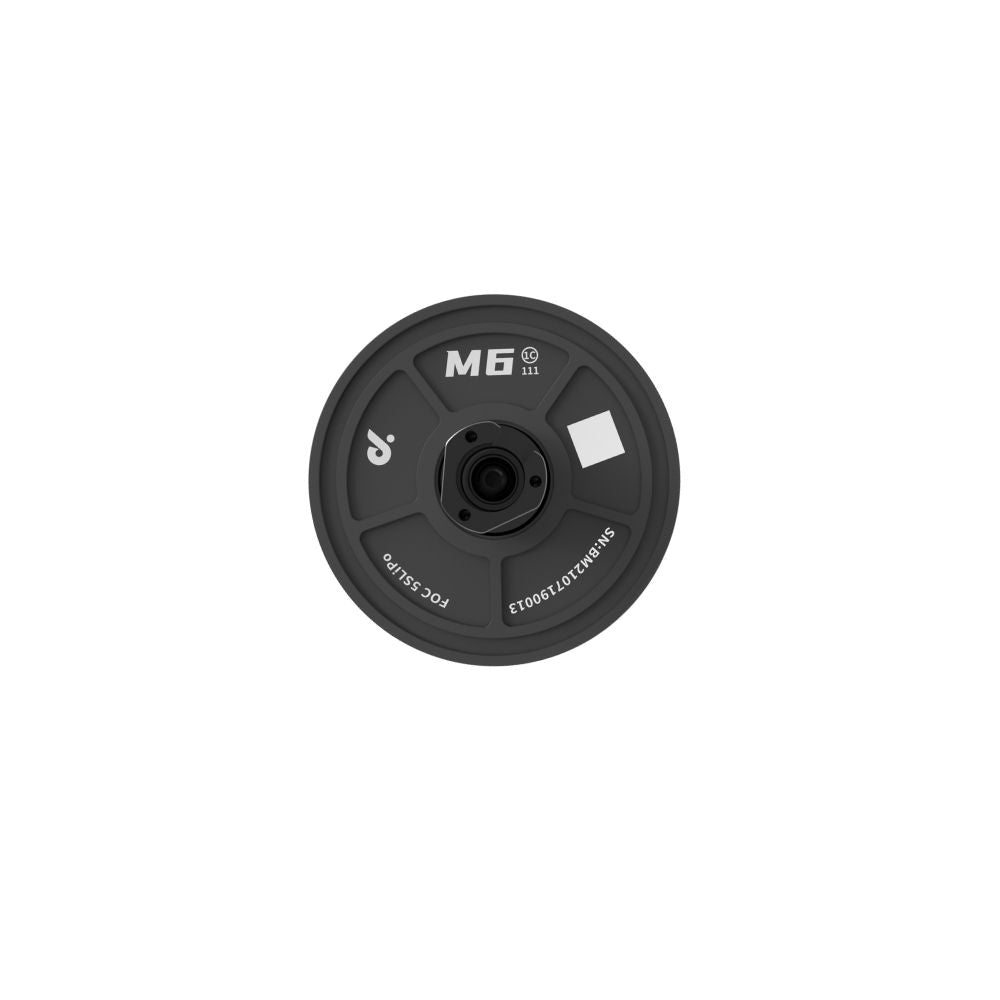
M0601C-111 is preferred over a flatter M06 motor when a robotic system requires higher torque density, stable continuous operation, encoder feedback, and industrial protection. With a rated torque of 0.96 Nm, the motor can generate about 19.2 N wheel force with a 50 mm radius wheel before losses, making it suitable for compact mobile robots, precision joints, and automation equipment where flat packaging alone is not enough.
Modern robotic designs often face a balance between installation space and mechanical performance. A flatter M06 motor reduces axial height and can fit into narrow mechanical structures, but the shorter magnetic stack usually limits available winding space and heat dissipation capacity. In applications running 8–12 hours per day, continuous torque capability becomes more important than reducing a few millimeters of motor thickness.
A typical flat motor design prioritizes low-profile integration, while the M0601C-111 focuses on maintaining stable output in compact systems. The difference can be seen in applications such as mobile robots, where acceleration, floor friction, payload changes, and repeated direction changes require more torque margin.
A motor selected only by thickness may fit the assembly but may not provide enough torque capacity during continuous robotic operation.
Small service robots are a common example. Between 2015 and 2025, indoor delivery and inspection robots increased demand for compact wheel modules that combine motors, encoders, and controllers in limited spaces. A wheel motor used in these systems often needs to maintain accurate speed control at low velocity while handling short periods of higher torque during acceleration.
For a wheel module using a 50 mm radius wheel, the relationship between torque and pushing force can be estimated as:
| Rated torque | Wheel radius | Theoretical force |
|---|---|---|
| 0.96 Nm | 40 mm | 24 N |
| 0.96 Nm | 50 mm | 19.2 N |
| 0.96 Nm | 60 mm | 16 N |
The same motor produces different mechanical performance depending on wheel size. A smaller wheel increases ground force, while a larger wheel improves obstacle crossing ability. This makes torque selection closely related to the robot structure rather than the motor specification alone.
The M0601C-111 is also suitable for systems requiring a low noise motor for service robot wheel modules. Service robots commonly operate in hotels, hospitals, offices, and public indoor areas where acoustic performance matters. Direct-drive structures reduce the number of mechanical transmission components, which can lower vibration and mechanical noise compared with some geared solutions.
A flatter motor may provide sufficient performance for lightweight devices, but service robots usually require stable operation under changing loads. A robot carrying a 10 kg payload may experience different wheel torque requirements during startup, turning, and climbing small surface changes. In many indoor platforms, continuous wheel torque usage is around 30–50% of the rated capacity, leaving additional margin for acceleration and external resistance.
Thermal performance is another factor separating the two motor types. Motor temperature affects winding resistance, current consumption, and torque consistency. A motor operating near its temperature limit may require reduced current output to protect internal components.
| Operating factor | Typical requirement |
|---|---|
| Daily operating time | 4–12 hours |
| Continuous torque usage | 30–70% of rated torque |
| Encoder resolution range | 512–2048 pulses/revolution |
| Gear efficiency in compact systems | 75–90% |
The larger electromagnetic structure of the M0601C-111 provides more room for copper windings and heat transfer compared with many ultra-flat designs. For robots that repeatedly start and stop hundreds of times per day, thermal stability helps maintain consistent motion performance.
Encoder integration further improves the suitability of the M0601C-111 for precision applications. Open-loop motors can experience position errors caused by friction, surface changes, or external forces. Closed-loop systems use encoder feedback to measure actual rotation speed and position, allowing controllers to correct deviations.
Since the introduction of modern collaborative robots in the early 2010s, encoder-based motion control has become common in compact robotic mechanisms. Many precision systems use encoder resolutions from several hundred to several thousand counts per revolution to achieve smoother low-speed movement.
Encoder feedback allows a compact motor to provide repeatable motion instead of only producing rotational force.
For robotic joints, wheel modules, and automated positioning equipment, the motor must also match environmental requirements. Industrial robots may operate in locations containing dust particles, moisture, or cleaning fluids. The M0601C-111 supports IP54 integration, providing protection against dust ingress that could affect internal components and resistance against water splashes from different directions.
The difference between a flat motor and the M0601C-111 becomes clearer when comparing application priorities.
| Requirement | Flatter M06 motor | M0601C-111 |
|---|---|---|
| Minimum axial height | Strong | Moderate |
| Continuous torque capability | Limited by size | Higher |
| Encoder integration | Depends on design | Available |
| Long operation cycle | Application dependent | Suitable |
| Robotic wheel modules | Light-duty use | Medium-duty use |
| Industrial environments | Requires additional protection | IP54 integration option |
A flatter motor remains useful when mechanical thickness is the main limitation. Examples include thin electronic equipment, compact adjustment mechanisms, and lightweight robotic structures where torque requirements remain below the motor capacity.
However, many robotic systems require more than physical installation. A mobile robot wheel module must provide acceleration, speed regulation, repeatability, and reliability at the same time. Increasing motor performance at the design stage can reduce the need for additional gear reduction or oversized mechanical components.
The M0601C-111 direct-drive motor design is based on this type of requirement. Detailed specifications and product information are available at M0601C-111 Direct Drive Motor, including mechanical dimensions and integration details.
Direct-drive motors have become increasingly common in precision robotics because they remove some transmission components between the motor and load. Traditional geared systems can introduce backlash, efficiency losses, and additional maintenance requirements. A direct-drive structure transfers torque more directly, which is useful for applications requiring smooth rotation.
For example, robotic joints used in research platforms often require precise control below 1 rpm during calibration or testing. A motor with stable torque output and encoder feedback can maintain smoother movement compared with systems designed mainly around compact dimensions.
The choice between M0601C-111 and a flatter M06 motor depends on the actual operating conditions.
| Application | Recommended motor type |
|---|---|
| Ultra-thin mechanism with low torque demand | Flatter M06 |
| Compact robot requiring higher torque | M0601C-111 |
| Precision rotary joint | M0601C-111 |
| Lightweight consumer device | Flatter M06 |
| Indoor service robot | M0601C-111 |
When a design requires the smallest possible motor thickness, a flat M06 solution can be appropriate. When the robot must operate continuously, carry changing loads, maintain accurate speed control, and provide reliable torque output, the M0601C-111 offers a more balanced option.
The selection process should consider torque, thermal conditions, feedback requirements, environmental protection, and expected operating hours. A motor with slightly greater installation depth can provide better overall system performance when the application depends on stable motion rather than minimum size alone.